
Tree & Landscaping Services in Waterloo, NE
Local Tree Service Expertise
North of Omaha in Waterloo, NE, trees face harsh winters, summer heat, and unpredictable storms. Whether you need tree removal, trimming, or stump grinding—this page covers everything about tree service | Waterloo, NE and landscaper | Waterloo, NE work. Learn how to keep trees healthy, when to prune, and why local expertise matters for your property.
How We Work
Professional tree service in Waterloo starts with a clear plan. Here's what the process looks like from first call to final cleanup.
Assess Your Trees
We inspect each tree for health, hazards, and structural issues. Homeowners in subdivisions near I-80 often face wind damage and power line conflicts we identify upfront.
Plan & Permit
Waterloo permits run through Douglas County. We guide you on local requirements and secure approvals before work begins.
Execute Safely
Our crew uses proper rigging, fencing, and spotters to protect your property, driveway, and neighbors. We work around existing landscaping and hardscape.
Grind & Clean
Stumps are ground below grade. All debris is chipped, hauled, or recycled. Your yard is left clean and ready for new planting or restoration.
You'll always know what's happening next—and when.
Our Services
Tree Removal
Dead, dying, or hazardous trees are removed safely. Removal timing matters in Waterloo's climate—late winter to early spring works best before new growth and disease season. We handle ash trees affected by emerald ash borer and winter-damaged specimens throughout residential neighborhoods.
- Large tree takedown with crane access
- Storm damage emergency removal
- Tree leaning toward structures or power lines
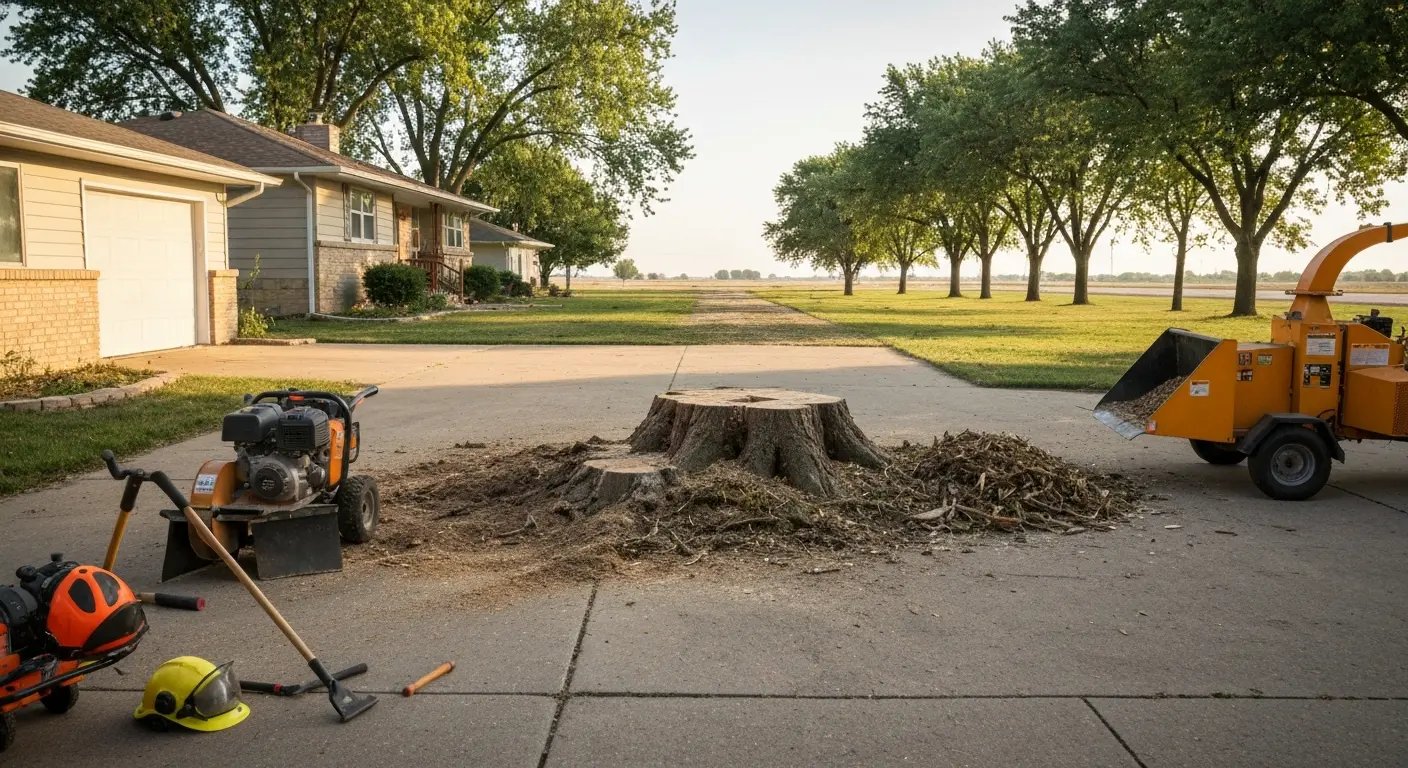
Safe removal of large oak near residential driveway, Waterloo NE.
Tree Trimming & Pruning
In Waterloo's eastern Nebraska location, dormant pruning runs late February through early April—the ideal window before spring growth. Regular trimming improves tree shape, removes crossing branches, and reduces wind catch in exposed suburban areas.
- Structural pruning for young trees
- Crown thinning for light and air flow
- Limb clearance from power lines and roofs
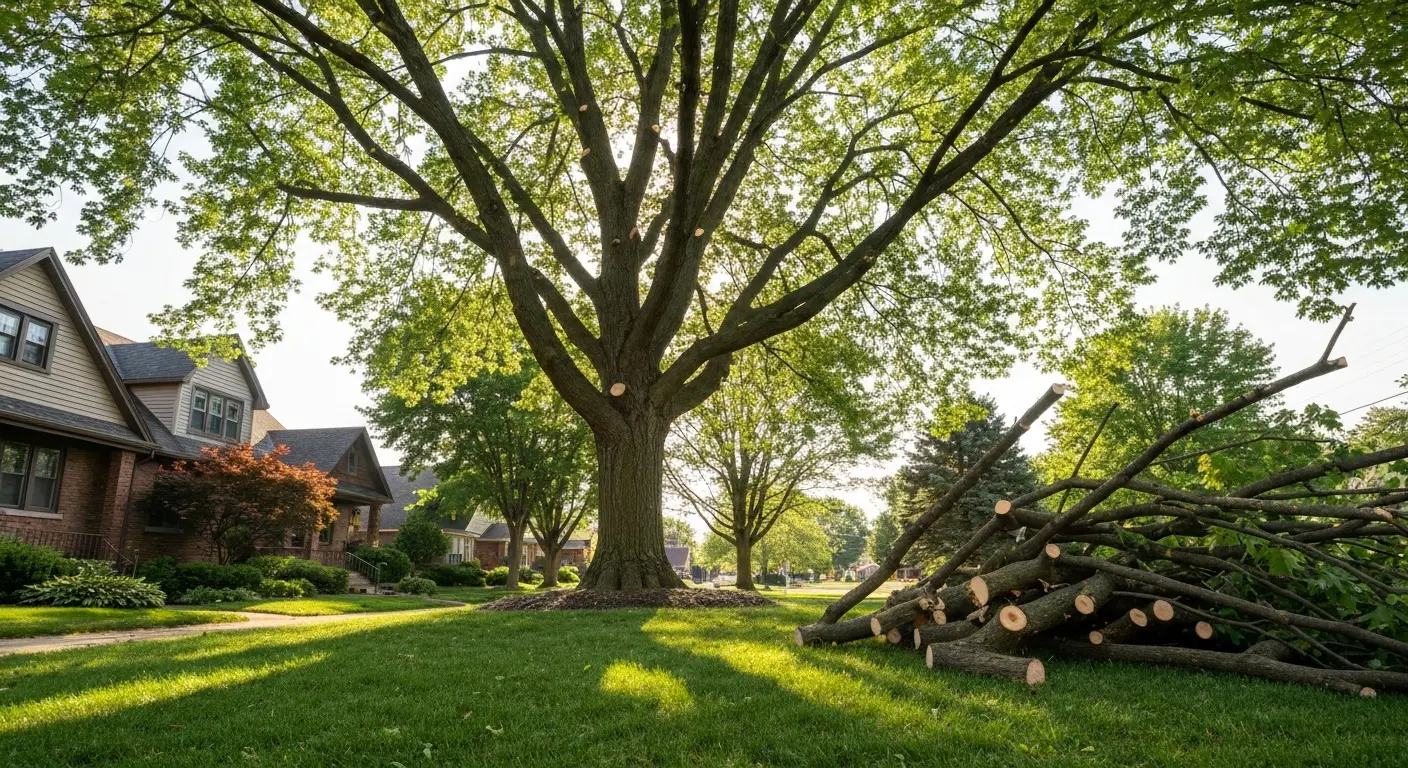
Crown thinning on mature maple, improving sunlight penetration, near N 267th Plaza.
Stump Grinding
Stumps are ground below-grade so you can replant, expand landscaping, or restore the yard. Grinding removes hazards and prevents regrowth of sprouting species. Waterloo homeowners often use the space for gardens or new trees.
- Stump grinding to below-grade depth
- Root removal and soil grading
- Debris chipping for mulch or removal
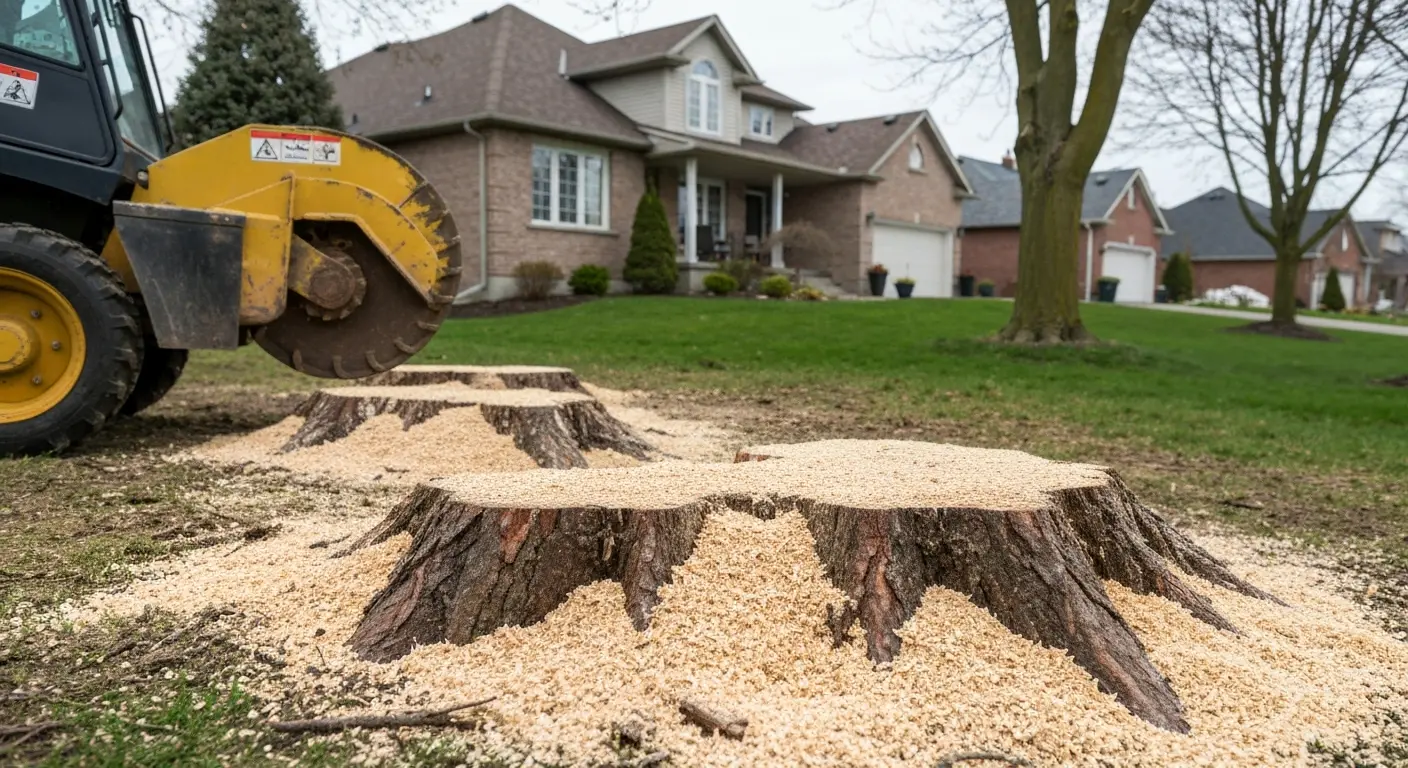
Grinding multiple stumps to grade for landscape expansion, residential Waterloo property.
Why It Matters Locally
Waterloo's Climate Challenges
Waterloo has a continental climate with hot summers, snowy winters, and distinct seasonal shifts. Trees planted in exposed subdivisions near I-80 suffer wind stress, salt damage, and temperature swings. Proper pruning and removal prevent failures before they happen.
Power Line & Property Safety
Branches reaching power lines create hazards and outages. Waterloo residents and businesses rely on professional clearance to avoid dangerous situations and service interruptions. Regular trimming keeps utilities safe and your property liability-free.
Oak pruning has a strict seasonal rule in Nebraska: avoid pruning oaks from April 15 through July 15 to reduce oak wilt transmission risk.
Disease & Pest Pressure
Ash trees face rapid decline from emerald ash borer, and other species suffer from Dutch elm disease, bur oak blight, and hail damage common across Nebraska. Early identification and removal prevent spread and save neighboring trees.
Serving Waterloo & Nearby Areas
Tree service in Waterloo means quick response, local knowledge, and respect for your property and neighborhood.
Why Local Matters
Waterloo sits at the edge of the Omaha metro, north via I-80. We understand Douglas County permit rules, typical residential lot sizes, and the mix of native and ornamental trees in this area. Faster arrival time. Better knowledge of your neighborhood's trees and soil.
Service Coverage
We serve residential properties, small commercial sites, and HOA common areas throughout Waterloo. Whether your lot sits near N 267th Plaza or in a subdivision backing I-80 corridor, we're equipped for your trees.
Getting Here & Next Steps
From I-80, take the Waterloo exit heading north. Most residential and commercial properties are within 5–10 minutes of our staging area. Call or message us with a photo and description of your tree concern. We'll schedule a free walkthrough and outline options—no pressure, no surprise costs.
Seasonal Tree Care Guide
Trees in Waterloo face winter stress, summer heat, and rapid seasonal shifts. Timing your care correctly keeps trees healthy and prevents costly failures.
Late Winter & Early Spring (Feb–Apr)
Late February through early April is the prime pruning window in eastern Nebraska. Begin dormant pruning when temperatures moderate and before new growth emerges. Remove winter-damaged branches, thin crowns, and clear limbs near power lines.
Late Spring through Summer (May–Aug)
Waterloo enters thunderstorm and tornado season in May, with frequent rains. Daytime summer temperatures reach 85–95°F, with July peaks near 100°F. Avoid major pruning; focus on watering young trees and monitoring storm damage. Light cleanup only.
Critical reminder: Do not prune oaks from April 15 through July 15 due to oak wilt disease risk.
Fall (Sep–Oct)
Fall is the best time for tourism and tree work in Nebraska. September to October offers warm, sunny, dry days with temperatures of 75–80°F during the day. Fall is ideal for tree planting, especially deciduous trees. Manage invasive woody species and prepare trees for winter stress.
Winter (Nov–Jan)
Waterloo winters are harsh. Temperatures drop below 40°F in late November. January–February brings temperatures around 12°F, with lows near 0°F and heavy December snow. Avoid pruning except emergencies. Protect young trees with burlap wrapping. Monitor heavy snow load on branches.
Frequently Asked Questions
Do I need a permit to remove a tree in Waterloo?
Yes. Waterloo uses Douglas County Permits for tree removal. Call (402) 444-7189 or work with us to secure approval before work begins.
When should I trim my trees in Waterloo?
Late February through early April for dormant pruning. Light pruning can happen in summer, but avoid heavy trimming during fall and early winter to prevent disease.
What about oak pruning—any special rules?
Yes. Nebraska has a strict seasonal restriction for oaks. Avoid pruning oaks from April 15 through July 15 to reduce oak wilt transmission risk, as sap-feeding beetles carrying oak wilt spores are most active during that period.
What trees do well in Waterloo's climate?
Bur oak is one of the most durable and long-lived trees for Nebraska, living for centuries with impressive shade and deep roots. Its thick, corky bark protects it from fire, insects, and harsh weather. Eastern redbud and pecan also thrive with proper care.
How often should I water newly planted trees?
Water immediately after planting and check moisture every few days. For the first growing season, deep water 1–2 times per week if rainfall is insufficient, delivering at least 10–15 gallons for small trees.
How can I protect young trees from Waterloo winters?
Wrap young or delicate trees with burlap from ground level up to first branches to shield against harsh winter winds and temperature fluctuations. Add mulch around the base to insulate roots. Remove wrapping in early spring to prevent moisture buildup.
DISCOVER WHAT OUR CUSTOMERS HAVE TO SAY ABOUT US
REVIEWS
proudly serving these areas
Bellevue, NE
Carter Lake, IA
Council Bluffs, IA
Glenwood, IA
Omaha, NE
Underwood, IA
Wahoo, NE
Waterloo, NE
READY TO take the next step?
get a free quote TODAY!
QUICK LINKS
our services
service areas
operating HOURS
Mon: 7:00 am - 7:00 pm
Tue: 7:00 am - 7:00 pm
Wed: 7:00 am - 7:00 pm
Thu: 7:00 am - 7:00 pm
Fri: 7:00 am - 7:00 pm
Sat: 7:00 am - 7:00 pm
Sun: Closed - Closed